
 We Ship Anywhere USA & Canada


A 10 chimney cap round handles serious volume. You'll typically need a 10 chimney cap for wood stove setups with large wood-burning fireplaces, commercial-grade wood stoves, and some industrial heating systems that push more exhaust than a standard residential flue can handle. Without a cap, that wide opening is an invitation for water damage, nesting animals, and dangerous backdrafts.
Every 10 chimney cap with screen we ship is constructed from 304 stainless steel with welded joints throughout and a full-perimeter spark arrestor mesh. We carry three styles at this size: standard protection, wind directional for downdraft issues, and high wind for severe exposure. Each is available for both air-cooled and single-wall pipe configurations, and each comes backed by a lifetime warranty.
Watch the video above to see all six options side by side. If you'd prefer to read through the details, everything is broken down section by section below.
Step 1 of 2
What kind of pipe
do you have?
Step 2 of 2
What problem are you
trying to solve?
Standard Air-Cooled Cap
Rain, animal, and debris protection for your Class A pipe. Our most popular cap.
View This Cap →Wind Directional Air-Cooled Cap
Rotating hood that turns with the wind to stop downdraft on your Class A pipe.
View This Cap →High Wind Air-Cooled Cap
Solid walls, no mesh. Built for hurricane-force wind on your Class A pipe.
View This Cap →Standard Single-Wall Cap
Rain, animal, and debris protection for your single-wall pipe.
View This Cap →Wind Directional Single-Wall Cap
Rotating hood that stops downdraft on your single-wall pipe.
View This Cap →High Wind Single-Wall Cap
Solid walls for hurricane-force wind on your single-wall pipe.
View This Cap →Let's Figure It Out Together
No worries. Call us and we'll help you identify your pipe type and pick the right cap.
Call 503-300-1926The Key Question
10 Chimney Cap Round:
What Pipe Type Do You Have?
Two types. Not interchangeable. The right cap depends on your pipe.
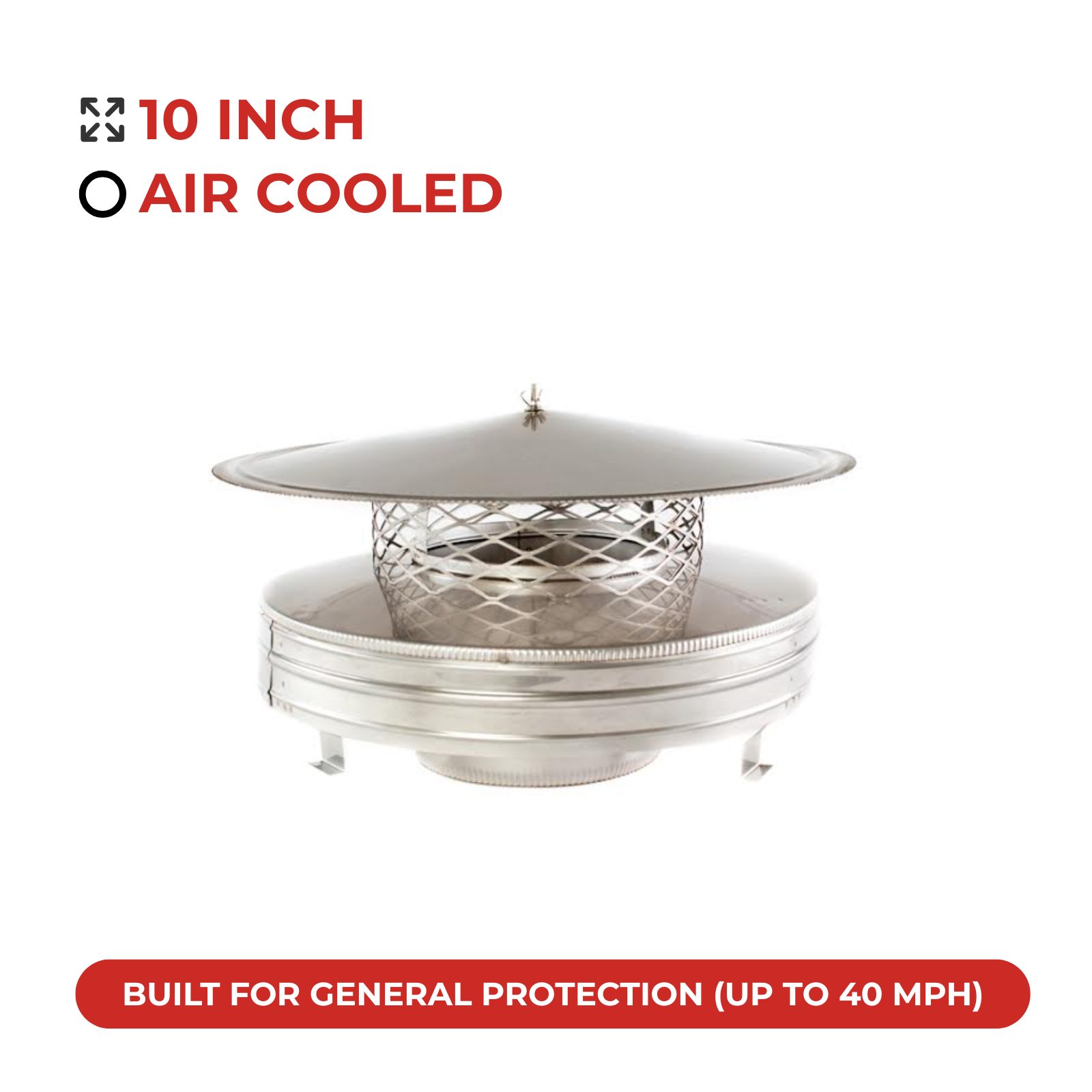
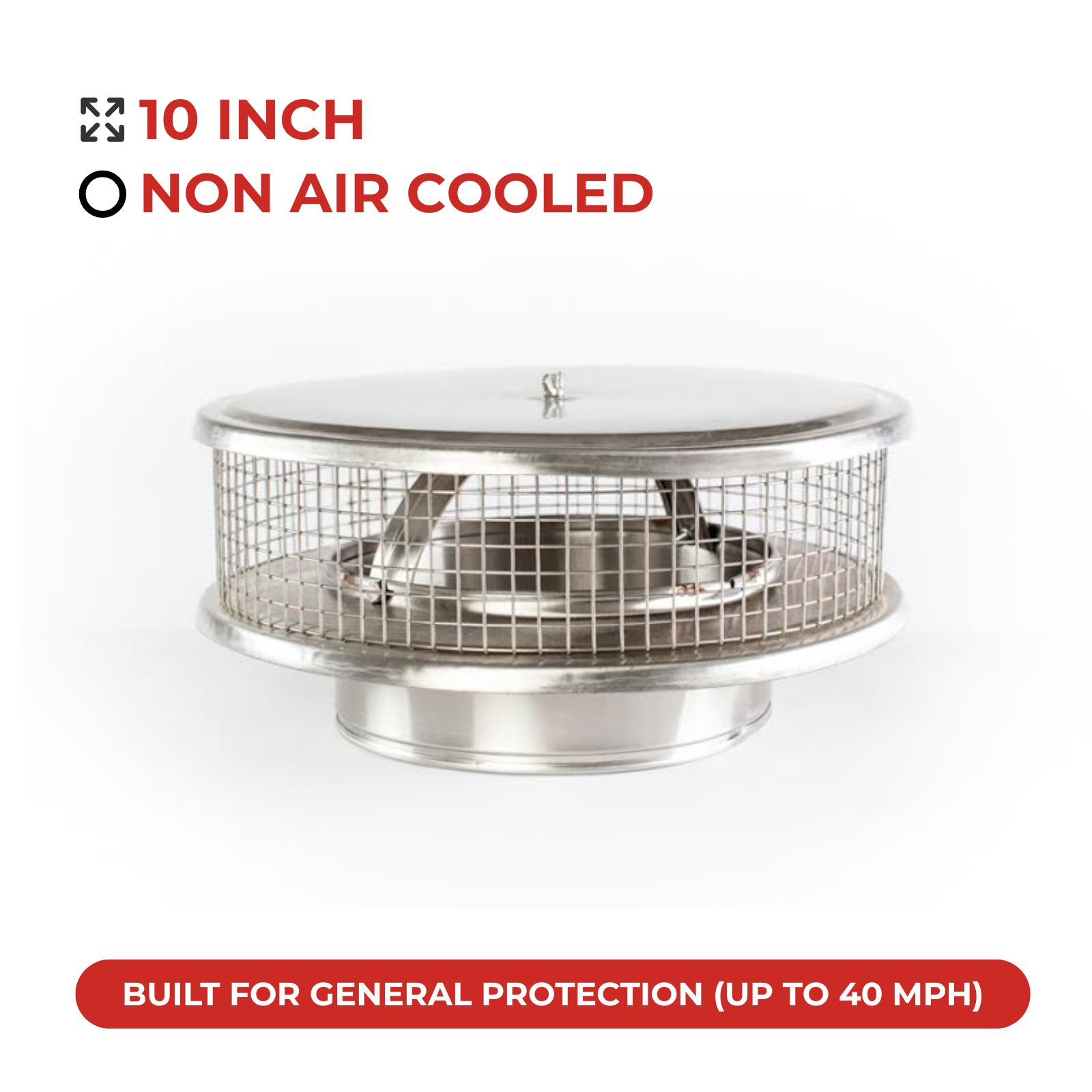
Understanding 10 Chimney Cap Round Pipe Types for Wood Stoves
Picking the wrong pipe type is the number one reason 10 chimney cap round orders get returned. Air-cooled and single-wall pipes look deceptively similar in product photos, but they're engineered for different systems and require different caps. Getting this right before you order saves you time and a return shipment.
Air-Cooled (Class A) Chimney Pipe
Air-cooled pipe, sometimes called Class A or double-wall pipe, has concentric metal walls with an insulating air space between them. That gap allows the pipe to pass safely through combustible roof structures. In the 10 inch range, you'll see this on high-capacity wood stoves, large masonry fireplace inserts, and some prefabricated zero-clearance units. If you're shopping for a 10 chimney cap for wood stove installations, this is almost always the pipe type you're working with.
For a 10 inch air-cooled cap, you'll need two numbers: the inside diameter (the open bore) and the outside diameter (across the outermost wall). A typical 10 inch air-cooled pipe measures 10 inches inside and 12 inches outside, though this varies between manufacturers. Always measure at the rooftop.
Single-Wall Chimney Pipe
Single-wall pipe is a straightforward single layer of metal. No insulation, no air gap. At the 10 inch size, you'll encounter it on large commercial gas appliances, industrial venting systems, and some older residential setups with oversized flues.
Only one measurement is needed: the inside diameter at the pipe's rooftop termination. The cap's collar inserts directly into the opening and contact pressure secures it.
What About Solid-Pack Insulated Pipe?
Solid-pack pipe confuses a lot of buyers because it appears to have two walls, but the space between them is filled with solid insulation rather than air. Despite the double-wall appearance, it uses a single-wall cap since only the inner bore diameter determines cap fit. When in doubt, call 503-300-1926 and we'll walk through the identification.
Step-by-Step
How to Measure
Your Flue
Accurate measurements prevent returns. Here's how to get them.
Get on the roof
Every measurement needs to happen at the rooftop termination point. The pipe where it exits the roof is the only section that matters for cap sizing. Dimensions at the stove connection or midway through the attic won't match what you need.
Identify your pipe type
Stand over the pipe and peer straight down inside it:
Measure the diameter
Run your tape measure across the full width of the opening:
Inside diameter only. A true 10 inch pipe measures 10 inches across the inner bore. The outer wall thickness is irrelevant for cap sizing.
Inside + outside diameter. Most 10 inch air-cooled pipes measure 10 inches inside and 12 inches outside, but manufacturer specs vary.
Common Mistakes
Even a fraction of an inch difference leads to a cap that doesn't seat properly.
The cap's outer ring needs the outside diameter to anchor correctly.
Pipe sections can differ in diameter. The rooftop termination is the only valid measurement point.
Not sure about your numbers? Call 503-300-1926 and we'll walk you through it.
Three Styles
Choose Your 10 Chimney Cap Round Style
Different problems, different designs.
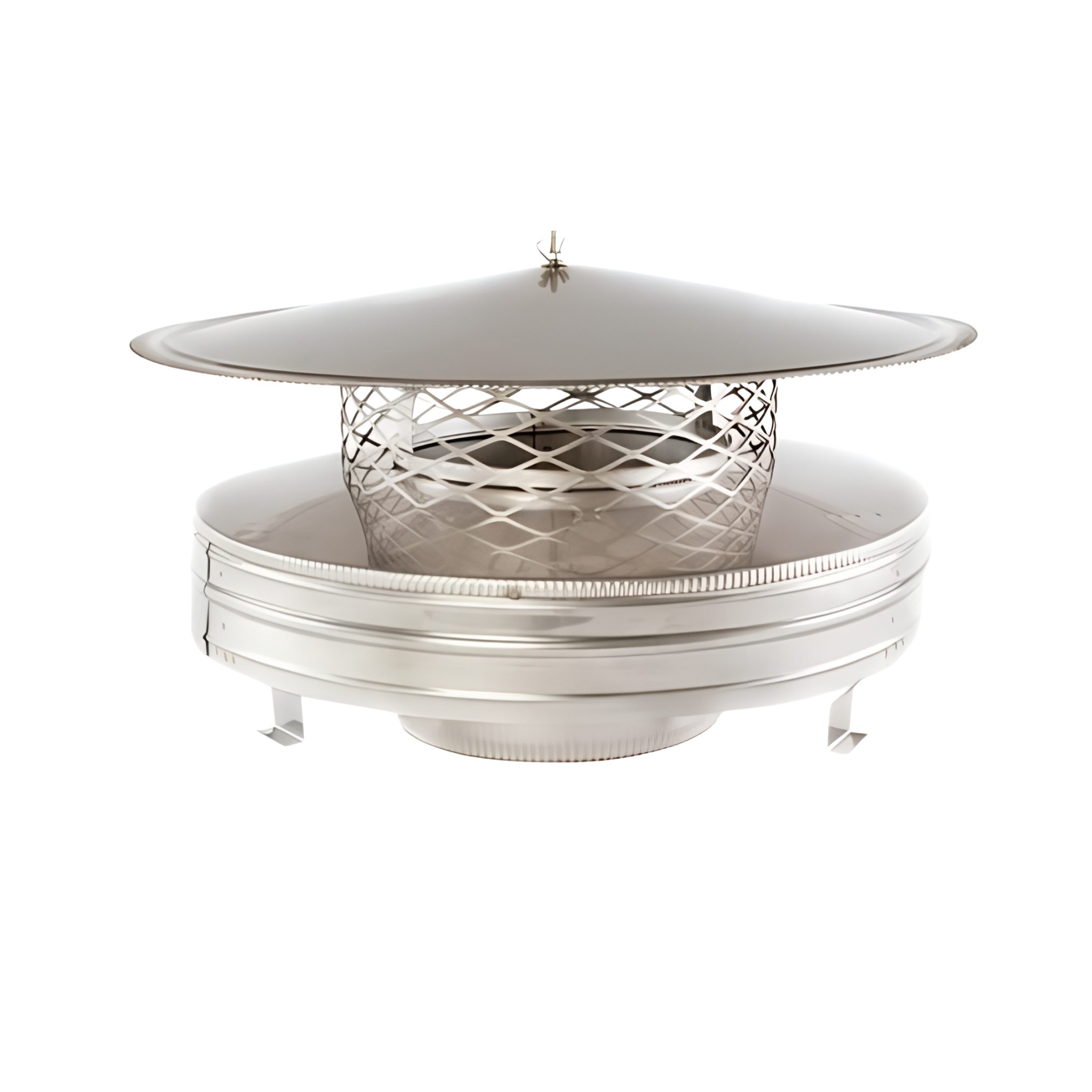
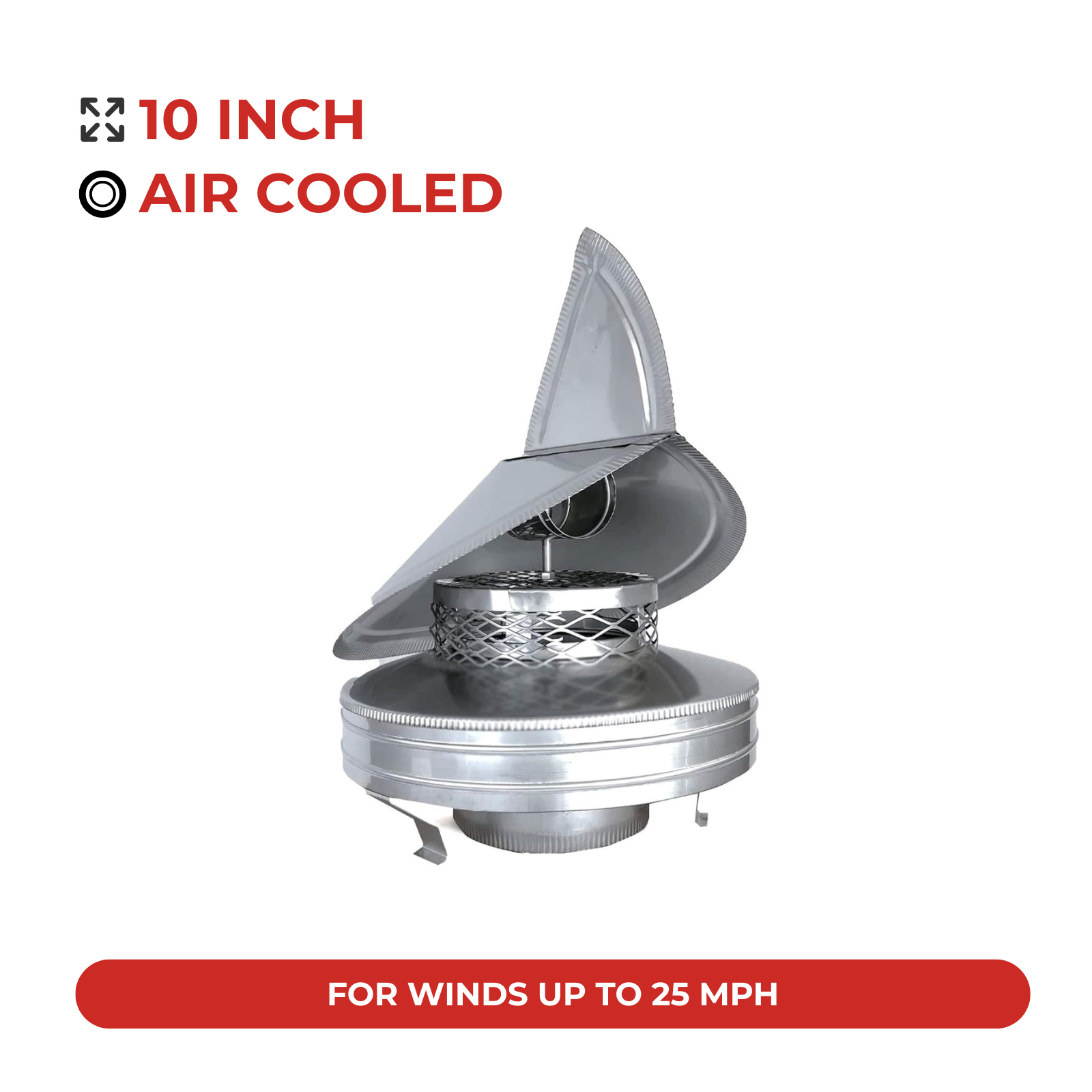
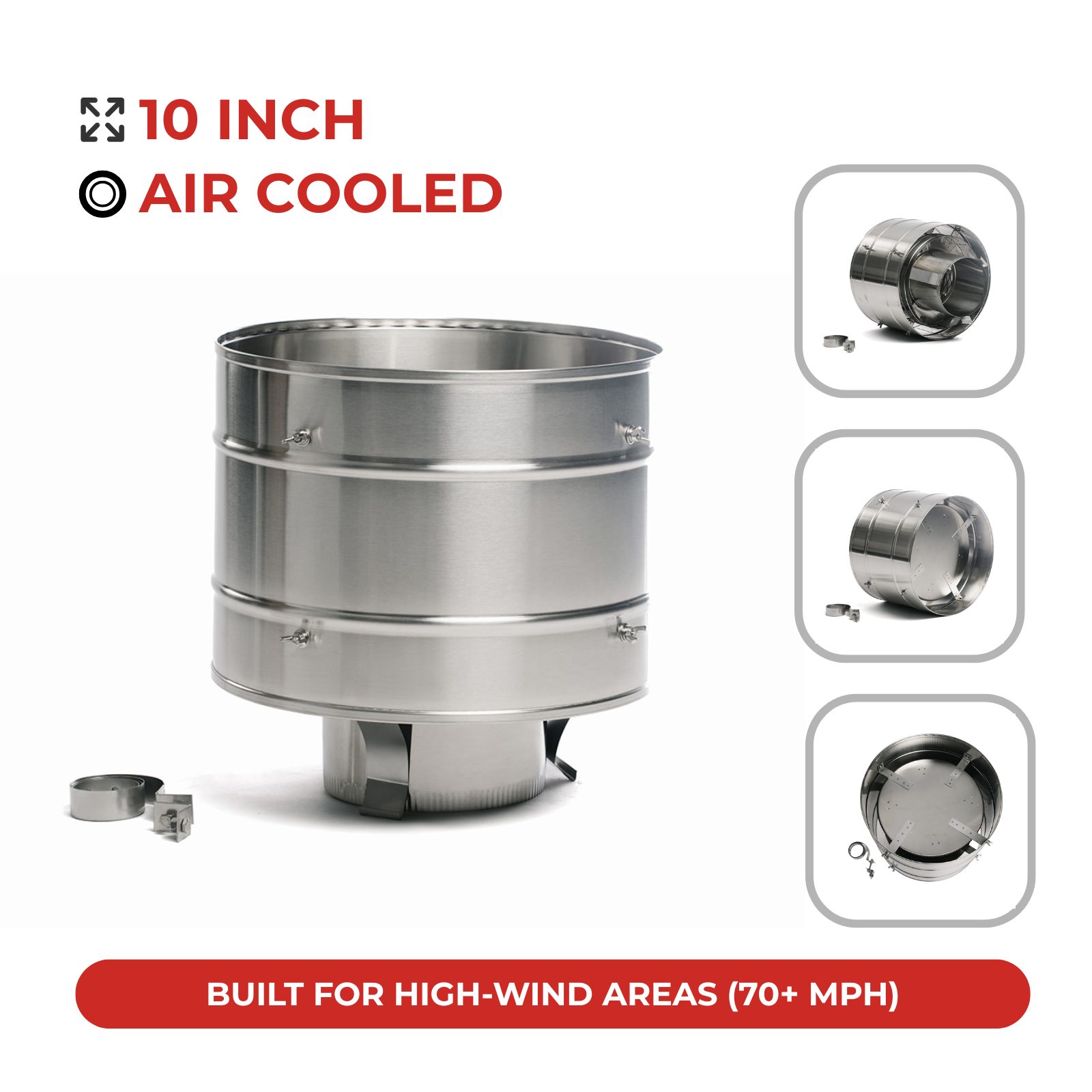
Which 10 Chimney Cap Round Fits Your Pipe?
Match your pipe type to the right cap before ordering.
| Your Pipe Type | Air-Cooled | Single-Wall |
|---|---|---|
| Round thin metal pipe | × | ✓ |
| Round insulated pipe (wall 1" or less) | × | ✓ |
| Round clay flue (wall 1" or less) | × | ✓ |
| Double-wall air-cooled (Class A) | ✓ | × |
| Triple-wall air-cooled (Class A) | ✓ | × |
| Rectangular / brick / oval flue | Different cap needed. see square/rectangular caps | |
Why Your Flue
Needs a Cap
An open pipe invites expensive problems.
A 10 chimney cap for wood stove installations isn't optional — it's what keeps your flue system working safely. A 10 inch pipe without a cap leaves roughly 78 square inches of your roof exposed. That's a big hole. In a region that gets 40 inches of annual rainfall, you're funneling hundreds of gallons of water directly into your flue system over time. The result is corroded pipe walls, saturated insulation, and eventually water damage that shows up on your ceiling long after the real destruction has already happened.
The wider opening also draws in more wildlife. Birds, raccoons, and squirrels treat a warm chimney flue like a five-star hotel. Chimney swifts, which are federally protected under the Migratory Bird Treaty Act, are especially drawn to larger flues. Once they've nested, removing them is illegal until they migrate out on their own. A 10 chimney cap with screen prevents this entirely — and on wood stoves, the spark arrestor mesh also blocks burning embers from escaping onto your roof.
Then there's the safety issue. Wind hitting a wide uncapped pipe can reverse the airflow and push combustion gases, including carbon monoxide, back into your home. The wider the pipe, the larger the surface area for wind to act on. A wind directional cap or high wind cap redirects that force instead of letting it funnel straight down.
Built to Last
304 stainless steel is the baseline for every cap in our lineup. This alloy handles prolonged exposure to moisture, salt air, acidic flue gases, and extreme temperatures without breaking down. Galvanized steel loses its protective zinc layer within a few years, especially on larger caps where more surface area accelerates the process. Once that coating is gone, rust takes over fast. Our welded construction holds every seam tight through years of expansion and contraction. The lifetime warranty reflects how confident we are in the material.
How to Install
One person, under 20 minutes. Position the cap, press the collar into place, done.
All 10 inch Chimcare caps install with friction fit. Position the cap over the pipe opening, press the collar into place, and you're done. No screws, clamps, adhesive, or specialized tools. A single person can complete the installation in under 20 minutes. If getting on the roof isn't an option, any chimney professional can handle it in one trip.
Everything You Need to Know
10 Chimney Cap Round Buying Guide: Wood Stove, Screen & Sizing
Buying an oversized 10 chimney cap round online shouldn't feel like guesswork. But with 10 inch caps, the stakes are a bit higher because fewer homeowners are familiar with this size. Here's a straightforward walkthrough to make sure you order the right one.
Step 1: Identify Your Pipe Type
Head up to the roof and examine the pipe from above. Two concentric walls separated by an air gap means it's air-cooled (Class A) — which is what you'll almost always need for a 10 chimney cap for wood stove setups. A single metal tube with no gap means single-wall. Air-cooled systems are built for solid fuel appliances. Single-wall is typical for large gas units and commercial venting.
Step 2: Measure at the Rooftop
Bring a tape measure to the rooftop and record the inside diameter. If you have air-cooled pipe, record the outside diameter as well. For a 10 inch air-cooled system, expect something around 10 inches inside and 12 inches outside, though you should verify against your specific pipe since manufacturers differ.
Step 3: Choose Your Cap Style
Start with the standard 10 chimney cap with screen unless you have a specific wind problem — the spark arrestor mesh is especially important on wood stoves where burning embers can escape. If wind regularly blows smoke or gas fumes back inside, upgrade to the wind directional. For properties that take sustained punishment from coastal winds, mountaintop gusts, or open-plain exposure, the high wind model is the only reliable solution.
Climate Considerations
A 10 inch opening funnels a significant volume of water with every rainstorm. In climates with heavy rain, frequent snow, or coastal humidity, a stainless steel cap isn't optional. It's damage prevention. The corrosion resistance of 304 stainless means you won't be replacing the cap every few years like you would with galvanized.
Material: Why Stainless Wins
Larger caps have more exposed surface area, which means galvanized coatings degrade faster on a 10 inch cap than on smaller sizes. The zinc layer wears unevenly, flakes into the flue, and leaves bare steel exposed to the elements. 304 stainless eliminates that failure mode entirely. One cap, no replacements.
Installation
Friction fit means no hardware and no expertise required. Slide the collar into position, confirm it's seated, and walk away. A standard installation takes one person less than 20 minutes. If you'd rather not climb the roof, any chimney sweep or handyman can do it in a single service call.
Frequently Asked Questions
Do I need a 10 chimney cap for a wood stove?
Yes. Any wood stove venting through a 10 inch flue needs a cap to block rain, animals, and debris, and to prevent wind-driven downdraft from pushing smoke back inside. For wood-burning appliances you'll almost always need the air-cooled version, since large wood stoves typically use Class A double or triple-wall pipe. A proper 10 chimney cap for wood stove also includes spark arrestor mesh, which is code-required in many wildfire-prone areas.
Does your 10 chimney cap come with a screen?
Yes. Every standard and wind directional 10 chimney cap with screen ships with a full-perimeter 304 stainless steel spark arrestor mesh. The screen blocks embers from escaping and keeps birds, squirrels, and debris out of the flue. Only the high wind model uses solid walls instead of mesh, which is required for its hurricane-rated performance.
How do I know if I have air-cooled or single-wall pipe?
Head to the rooftop and look into the pipe. If you see two metal walls with an air space between them, it's air-cooled. If it's a single metal cylinder, it's single-wall. Larger wood-burning appliances typically connect to air-cooled pipe. Large gas appliances and commercial systems often use single-wall.
Will a 10 chimney cap round fit my gas fireplace?
A 10 inch opening is less common for residential gas fireplaces but does appear on some high-output commercial units. The only reliable way to verify is measuring the inside diameter at the rooftop termination. Then confirm if it's single-wall or air-cooled to select the matching cap.
What if my measurement is between sizes?
Non-standard measurements are common with 10 inch pipe, especially on older installations. Call 503-300-1926 and we'll fabricate a custom cap sized to your exact specifications.
Can I use a round cap on a masonry chimney?
Round caps are built exclusively for round metal pipes. Masonry chimneys with rectangular or square clay liners require a different style of cap designed to mount over the chimney crown.
Wind directional vs. high wind: what's the difference?
A wind directional cap uses a pivoting hood that rotates to face away from incoming wind, addressing moderate downdraft. A high wind cap uses solid walls with engineered exhaust ports that physically block wind from entering the flue. The choice depends on how extreme your wind exposure is.
How long does a stainless steel chimney cap last?
304 stainless steel resists corrosion from rain, snow, UV, salt air, and acidic combustion byproducts. Under typical conditions, it will last longer than the pipe beneath it. Every Chimcare cap includes a lifetime warranty.
Do I need a chimney cap for a gas fireplace?
Yes. Gas appliances vent combustion byproducts through the roof just like wood-burning systems. An open pipe invites water intrusion, animal nesting, and wind-driven backdraft of exhaust gases including carbon monoxide.
Will a chimney cap reduce my draft?
A correctly sized cap has no negative effect on draft performance. The mesh or exhaust slots are engineered to let gases pass through without restriction. Many homeowners report improved draft after installing a cap because it blocks the cross-winds that cause downdraft in the first place.
Do you ship to Canada?
Yes. Chimcare delivers 10 inch caps to every US state and throughout Canada. Check our Canada shipping page for estimated delivery times and details.
What pipe brands are compatible with your 10 inch caps?
Chimcare 10 inch caps are compatible with pipes from DuraTech, DuraVent, All-Fuel, Ventis, Selkirk, HeatFab, Imperial, AmeriVent, Superior, Metalbest, and other major brands. If the bore measures 10 inches, the cap will fit. For older or uncommon pipe brands, call 503-300-1926 to verify.
Not sure which cap you need?
Call 503-300-1926. Give us your pipe type, your measurements, and a description of the issue you're dealing with. We'll point you to the right cap or build a custom solution if your pipe doesn't match standard dimensions.