
 We Ship Anywhere USA & Canada


An 8 chimney cap round is bigger than what most homeowners expect to find on their roof. You'll typically need an 8 chimney cap for wood stove setups with high-output fireboxes, large fireplace inserts, and some older factory-built fireplaces that were designed for heavier draft loads. If yours is sitting up there without a cap, that's roughly 50 square inches of open space collecting rain, leaves, and whatever birds or raccoons decide to move in.
Every 8 chimney cap with screen we build uses 304 stainless steel with fully welded seams and a full-perimeter spark arrestor mesh. No crimping, no shortcuts. We offer three designs in this size: a standard cap for general protection, a wind directional for downdraft problems, and a high wind model for exposed locations. All three come in air-cooled and single-wall configurations, and every one ships with a lifetime warranty.
Hit play on the video above for a quick walkthrough of each option. Or keep scrolling and we'll break it all down step by step.
Step 1 of 2
What kind of pipe
do you have?
Step 2 of 2
What problem are you
trying to solve?
Standard Air-Cooled Cap
Rain, animal, and debris protection for your Class A pipe. Our most popular cap.
View This Cap →Wind Directional Air-Cooled Cap
Rotating hood that turns with the wind to stop downdraft on your Class A pipe.
View This Cap →High Wind Air-Cooled Cap
Solid walls, no mesh. Built for hurricane-force wind on your Class A pipe.
View This Cap →Standard Single-Wall Cap
Rain, animal, and debris protection for your single-wall pipe.
View This Cap →Wind Directional Single-Wall Cap
Rotating hood that stops downdraft on your single-wall pipe.
View This Cap →High Wind Single-Wall Cap
Solid walls for hurricane-force wind on your single-wall pipe.
View This Cap →Let's Figure It Out Together
No worries. Call us and we'll help you identify your pipe type and pick the right cap.
Call 503-300-1926The Key Question
8 Chimney Cap Round:
What Pipe Type Do You Have?
Two types. Not interchangeable. The right cap depends on your pipe.
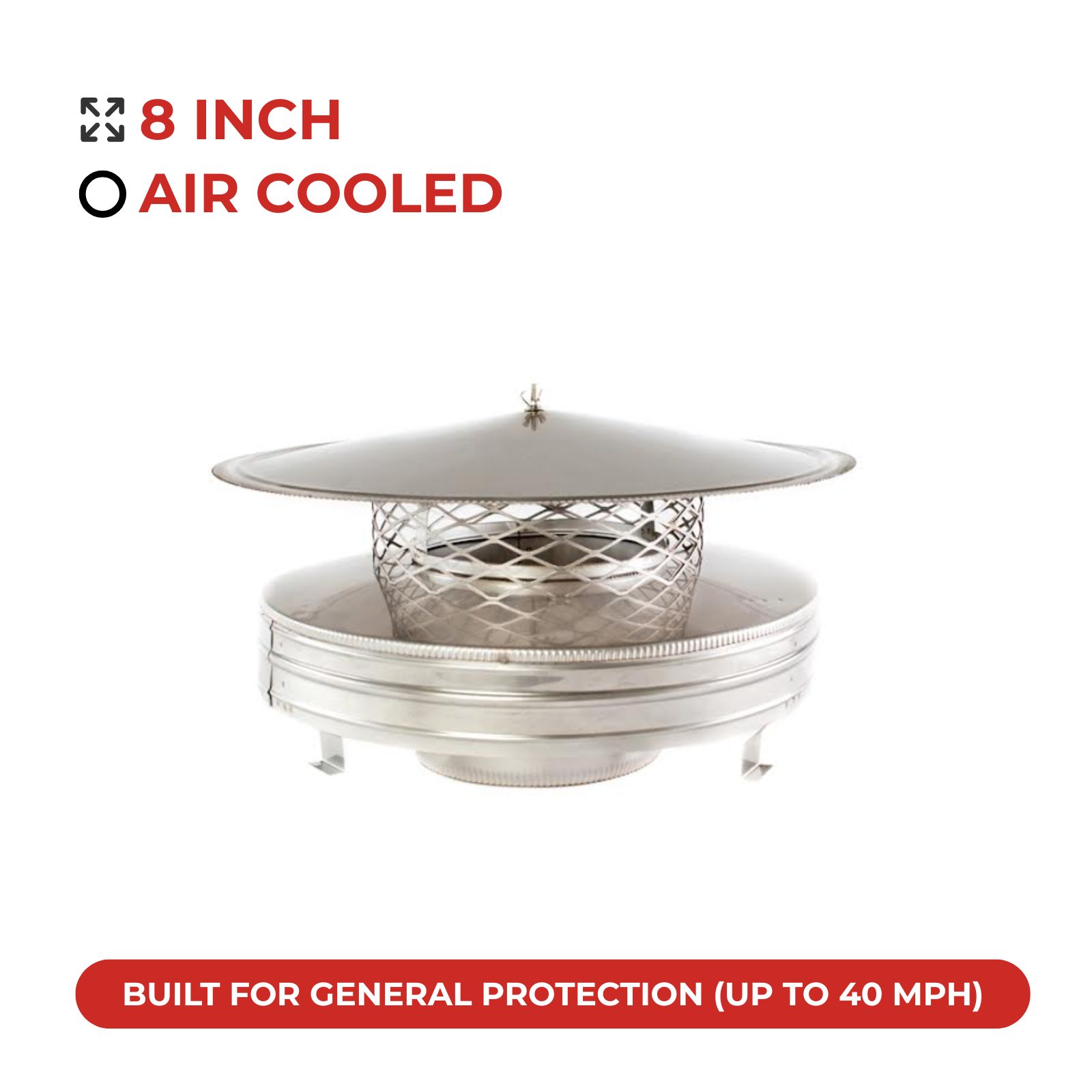
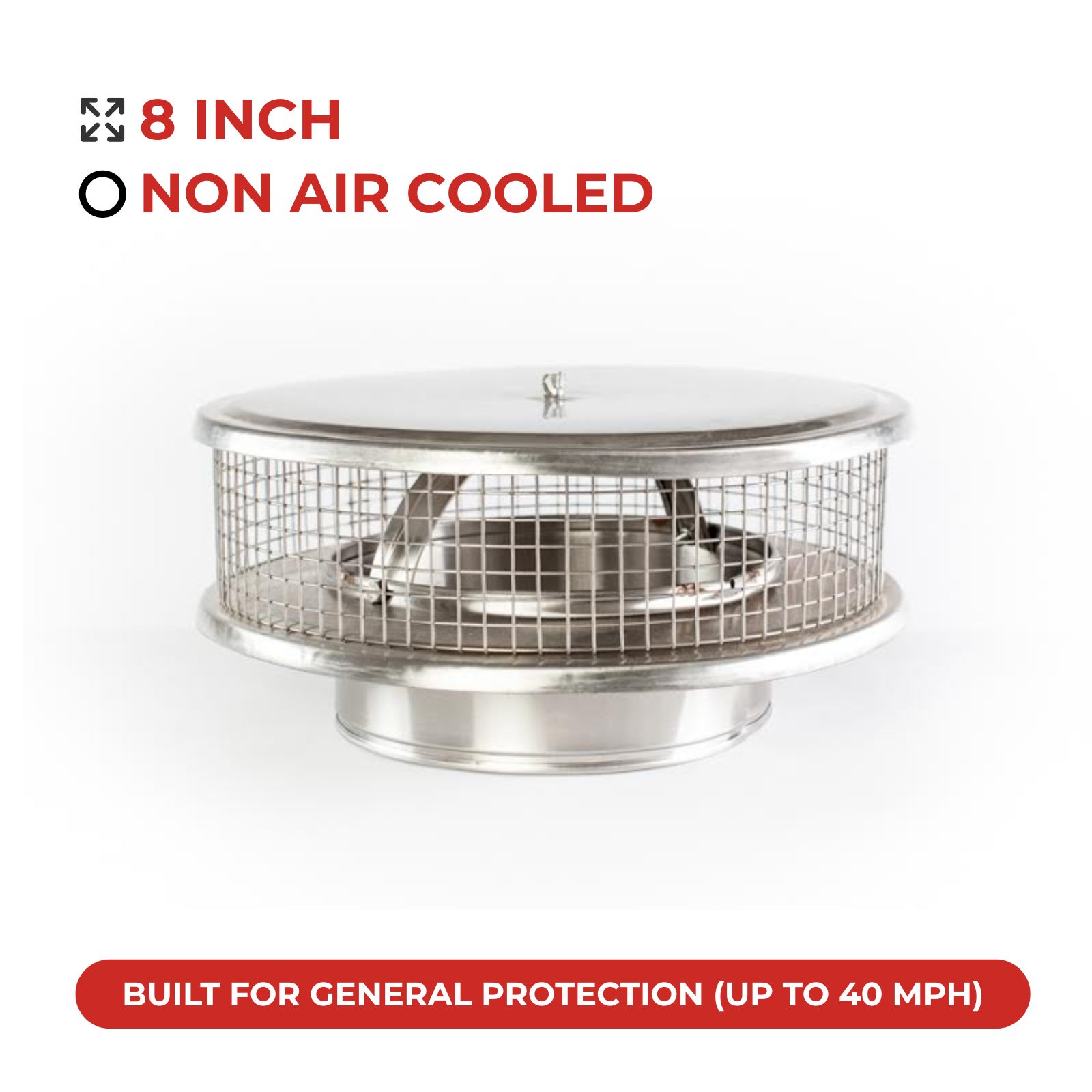
Understanding 8 Chimney Cap Round Pipe Types for Wood Stoves
The biggest mistake people make when ordering an 8 chimney cap round is assuming all round pipes are the same. They're not. There are two distinct pipe systems, and each one requires a completely different cap. Mixing them up means the cap either won't fit at all or sits loose enough to blow off in the first storm.
Air-Cooled (Class A) Chimney Pipe
Air-cooled pipe uses multiple metal walls separated by an air gap for insulation. This design allows the pipe to safely pass through combustible materials like roof framing. You'll find 8 inch air-cooled pipe on high-output wood stoves, large fireplace inserts, and some factory-built zero-clearance fireplaces. If you're shopping for an 8 chimney cap for wood stove installations, this is almost always the pipe type you're working with.
Ordering an 8 inch air-cooled cap requires two measurements. The inside diameter is the opening you can see through. The outside diameter is the full width across the outer wall. A common combo is 8" inside by 10" outside, but manufacturers vary, so measure yours at the rooftop.
Single-Wall Chimney Pipe
Single-wall pipe is one layer of metal with no insulation and no air gap. In 8 inch, you'll see it on larger gas appliances, commercial water heaters, and some B-vent installations where the manufacturer specifies a wider flue opening.
A single-wall cap needs one measurement: the inside diameter at the rooftop. The cap's collar drops inside the pipe and friction keeps it locked in place.
What About Solid-Pack Insulated Pipe?
Solid-pack pipe looks like it has two walls because insulation is packed between them. But there's no air gap, which means it takes a single-wall cap. The cap seats against the inner opening, not the outer shell. This catches a lot of people off guard. If you're staring at your pipe and can't tell the difference, call us at 503-300-1926. We'll figure it out together.
Step-by-Step
How to Measure
Your Flue
A tape measure and five minutes is all it takes.
Get on the roof
All measurements happen at the rooftop, not at the appliance or where the pipe connects inside. The termination point at the top is where the cap sits, and pipe dimensions can shift slightly between sections. Measuring anywhere else risks getting the wrong size.
Identify your pipe type
Stand over the pipe and look straight down inside:
Measure the diameter
Lay your tape measure across the opening at its widest point:
Inside diameter only. A true 8" pipe reads 8 inches across the opening. Ignore the outside.
Inside + outside diameter. A typical 8" air-cooled pipe is 8" inside x 10" outside, but this varies by brand.
Common Mistakes
The outer edge adds extra width. That's how you end up with a cap that wobbles.
Without both numbers, the cap won't seat properly on the outer wall.
The rooftop termination is the only measurement point that matters for cap fit.
Not sure about your numbers? Call 503-300-1926 and we'll walk you through it.
Three Styles
Choose Your 8 Chimney Cap Round Style
Different problems, different designs.
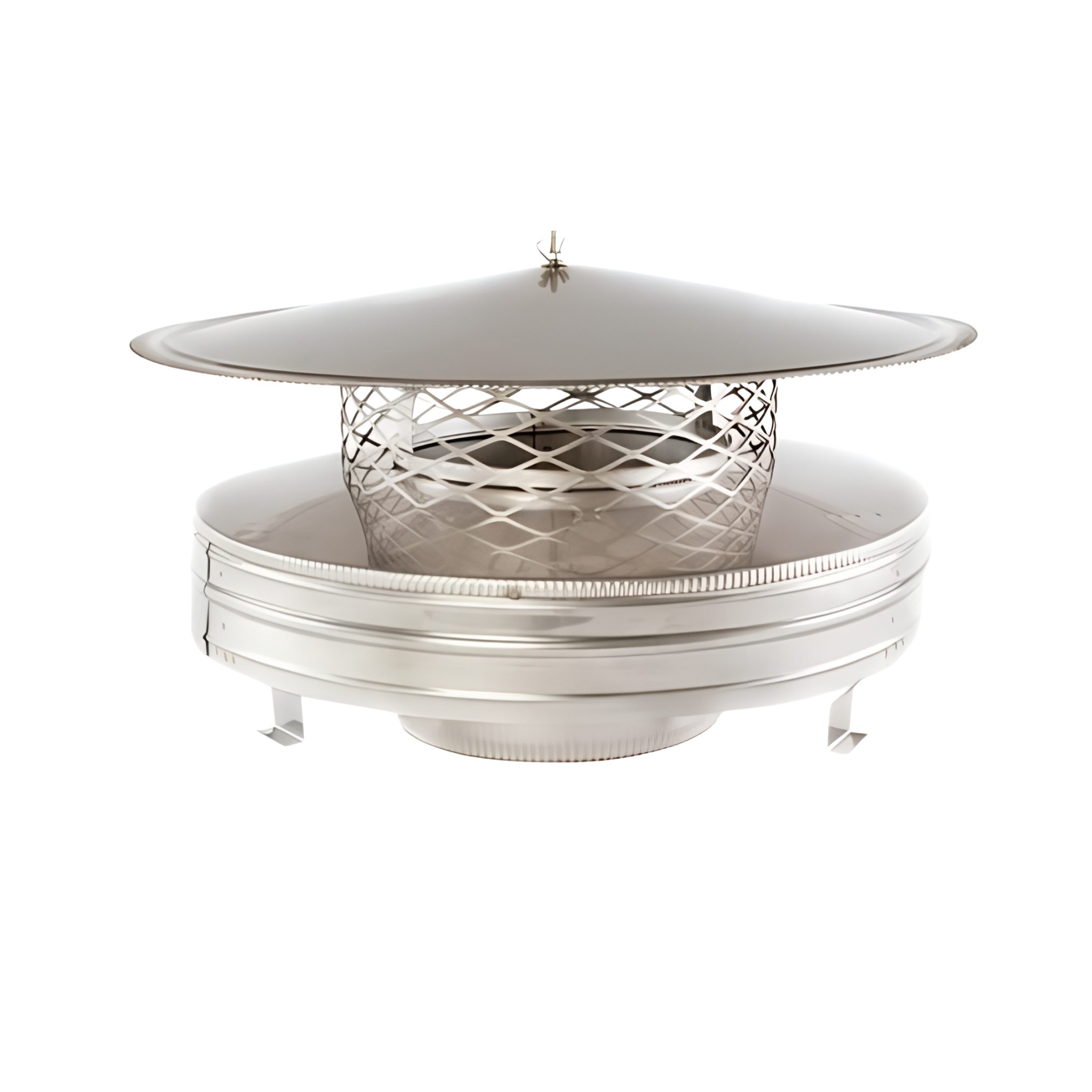
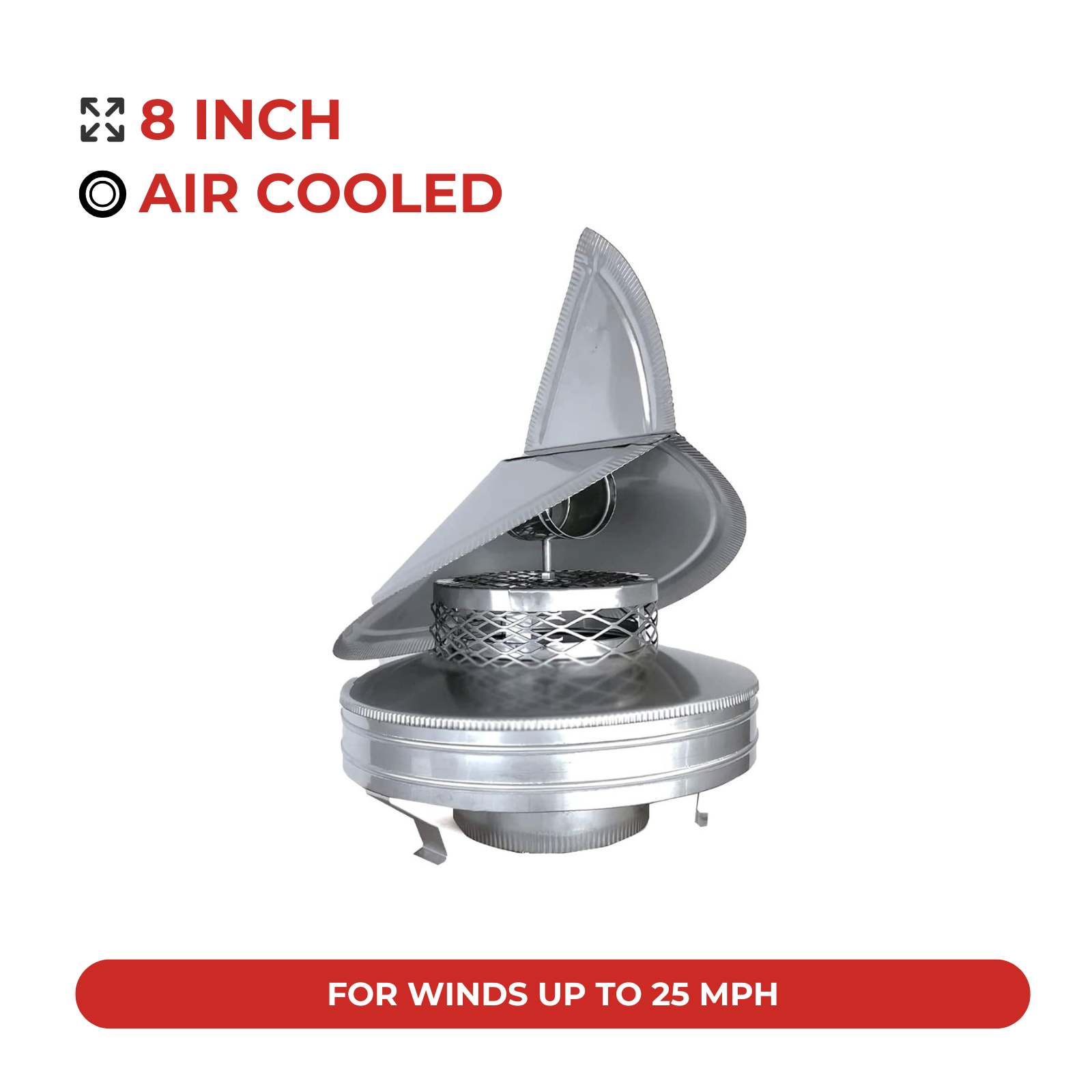
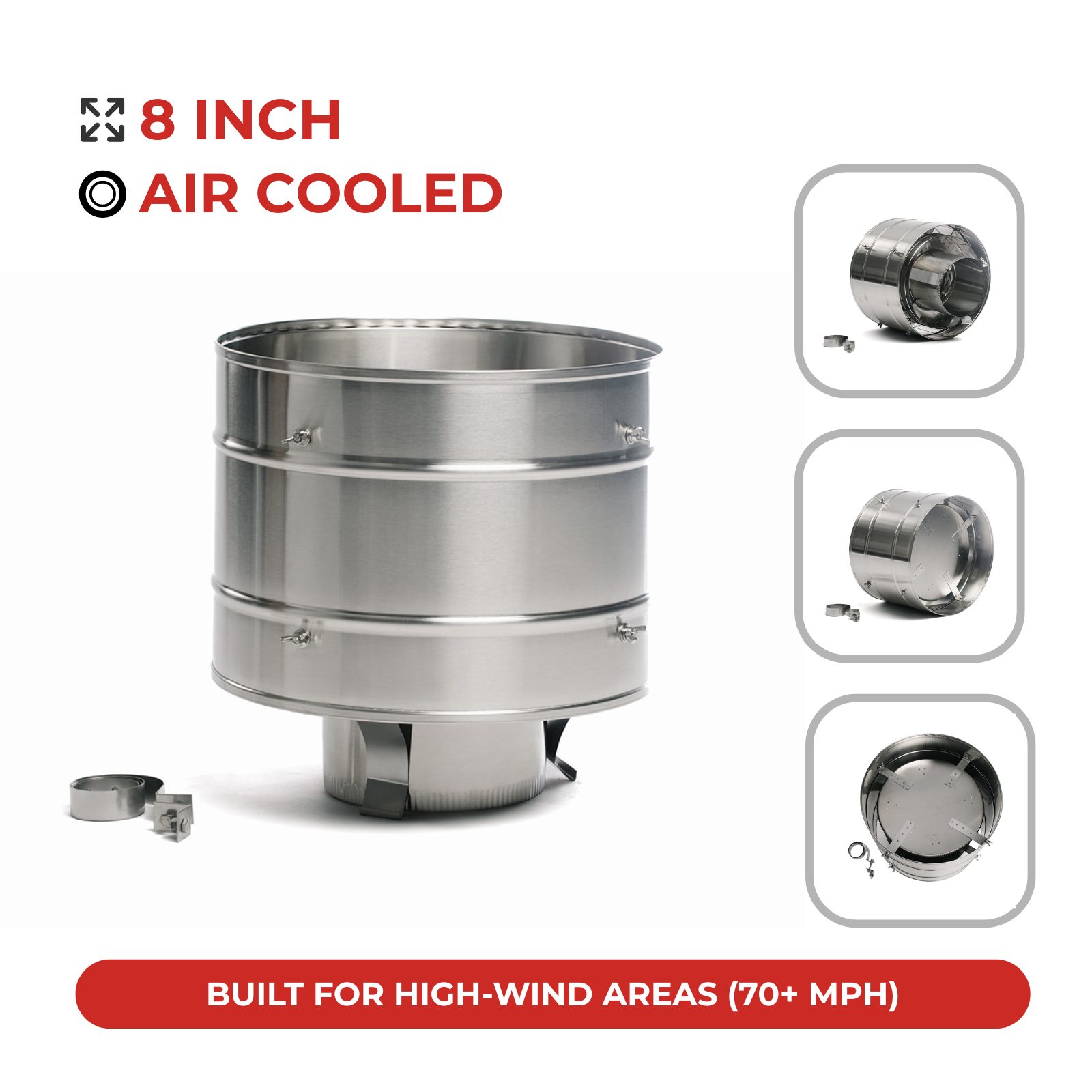
Which 8 Chimney Cap Round Fits Your Pipe?
Match your pipe type to the right cap before ordering.
| Your Pipe Type | Air-Cooled | Single-Wall |
|---|---|---|
| Round thin metal pipe | × | ✓ |
| Round insulated pipe (wall 1" or less) | × | ✓ |
| Round clay flue (wall 1" or less) | × | ✓ |
| Double-wall air-cooled (Class A) | ✓ | × |
| Triple-wall air-cooled (Class A) | ✓ | × |
| Rectangular / brick / oval flue | Different cap needed. see square/rectangular caps | |
Why Your Flue
Needs a Cap
An open pipe invites expensive problems.
An 8 chimney cap for wood stove installations isn't optional — it's what keeps your flue system working safely. With an 8 inch opening, you're looking at roughly 50 square inches of exposed space. That's nearly double what a standard 6 inch pipe lets in. Over the course of a rainy season, that kind of water intrusion corrodes pipe walls, saturates insulation, and eventually shows up as brown stains on your ceiling. At that point, the repair bill dwarfs what a cap would have cost.
The larger opening also makes 8 inch pipes more attractive to animals. Raccoons, squirrels, and birds (including chimney swifts, which are federally protected and cannot legally be removed once nested) see the warmth rising from your flue as an invitation. Spark arrestor screen mesh on a properly fitted 8 chimney cap with screen keeps all of them out year-round — and on wood stoves, it also blocks burning embers from escaping onto your roof.
Downdraft is the safety concern. Wind hitting an 8 inch uncapped pipe at the right angle forces carbon monoxide and other exhaust gases back into the living space. The wider the opening, the more wind it catches. A wind directional cap handles moderate downdraft, and the high wind model handles the worst conditions.
Built to Last
304 stainless is the standard across every cap we ship. It resists corrosion from rain, salt spray, temperature extremes, and the acidic byproducts of combustion that eat through lesser metals. Galvanized caps from big box stores might last 3 to 5 years before the zinc coating breaks down. Stainless doesn't have that expiration date. Welded seams instead of crimped joints mean the cap holds its shape through years of thermal cycling. That durability is why the lifetime warranty isn't a marketing gimmick.
How to Install
One person, under 15 minutes. Measure, select size, slide cap in. Done.
Every 8 inch cap uses friction fit. The collar seats into or over the pipe opening, and contact pressure holds it secure. No fasteners, no adhesive, no specialized equipment. Bring a tape measure to confirm your diameter, carry the cap up to the roof, and slide it into position. The whole job takes one person about 15 minutes. If you'd rather not get on the roof, any chimney sweep can handle it in a single visit.
Everything You Need to Know
8 Chimney Cap Round Buying Guide: Wood Stove, Screen & Sizing
Ordering an 8 chimney cap round doesn't need to be complicated, but there are a few things you need to get right. Wrong pipe type, wrong measurement, or wrong style means a return. Here's the quick version of how to avoid that.
Step 1: Identify Your Pipe Type
Climb up and look at the pipe from above. If you see two walls with an air gap between them, that's air-cooled (Class A) — which is what you'll almost always need for an 8 chimney cap for wood stove setups. If it's a single metal tube, that's single-wall. These two systems use completely different caps. An air-cooled cap physically cannot fit on a single-wall pipe, and the reverse is also true.
Step 2: Measure at the Rooftop
Take your tape measure to the rooftop termination. For single-wall, you only need the inside diameter. For air-cooled, measure both inside and outside. An 8 inch air-cooled pipe typically reads 8" inside and 10" outside, but that varies between manufacturers. Write your numbers down before heading back inside.
Step 3: Choose Your Cap Style
For basic rain, animal, and debris protection, the standard 8 chimney cap with screen handles it — the spark arrestor mesh is especially important on wood stoves where burning embers can escape. If wind regularly pushes smoke or exhaust back inside, step up to the wind directional. For properties on exposed hilltops, coastal bluffs, or anywhere that sees sustained high winds, the high wind cap is the only option that won't fail.
Why the Bigger Opening Matters
An 8 inch pipe collects roughly 5 gallons of rainwater for every inch of rainfall. That's almost double what a 6 inch pipe takes in. In wet climates like the Pacific Northwest, the Midwest, or the Northeast, that water accumulation accelerates corrosion and creates conditions for mold inside the flue system. Stainless steel resists this far better than galvanized coatings.
Material: Why Stainless Wins
Galvanized zinc coatings break down within a few years, especially on larger caps where more surface area is exposed to the elements. Once the coating fails, bare steel corrodes quickly. Rust flakes drop into the flue and accumulate on the damper. 304 stainless steel doesn't degrade this way. It's a one-time purchase that outlasts the pipe itself.
Installation
Every 8 inch Chimcare cap uses a friction-fit collar. No hardware, no sealant, no power tools. Carry it up the ladder, position it over the pipe, and press it into place. The whole process takes about 15 minutes with one person. If roof access isn't something you're comfortable with, a local chimney sweep or handyman can handle it in a single trip.
Frequently Asked Questions
Do I need an 8 chimney cap for a wood stove?
Yes. Any wood stove venting through an 8 inch flue needs a cap to block rain, animals, and debris, and to prevent wind-driven downdraft from pushing smoke back inside. For wood-burning appliances you'll almost always need the air-cooled version, since wood stoves typically use Class A double or triple-wall pipe. A proper 8 chimney cap for wood stove also includes spark arrestor mesh, which is code-required in many wildfire-prone areas.
Does your 8 chimney cap come with a screen?
Yes. Every standard and wind directional 8 chimney cap with screen ships with a full-perimeter 304 stainless steel spark arrestor mesh. The screen blocks embers from escaping and keeps birds, squirrels, and debris out of the flue. Only the high wind model uses solid walls instead of mesh, which is required for its hurricane-rated performance.
How do I know if I have air-cooled or single-wall pipe?
Go up to the rooftop and look straight down into the pipe. If you can see two separate walls with a gap of air between them, that's air-cooled (Class A). If it's just one solid tube of metal, that's single-wall. Larger wood stoves almost always use air-cooled. Larger gas appliances and commercial water heaters typically use single-wall.
Will an 8 chimney cap round fit my gas fireplace?
Some larger or higher-BTU gas fireplaces do use 8 inch pipe. The only way to know for sure is to measure the inside diameter at the rooftop. Once you confirm 8 inches, determine if it's single-wall or air-cooled so you get the right cap type.
What if my measurement is between sizes?
That happens more often than you'd think, especially with older or less common pipe brands. Call 503-300-1926 and we'll build a custom cap to your exact measurements.
Can I use a round cap on a masonry chimney?
Round caps are designed for round metal pipes only. If you have a brick or stone chimney with a clay flue liner, you'll need a square or rectangular cap sized to fit over the crown.
Wind directional vs. high wind: what's the difference?
The wind directional has a rotating hood that pivots away from the wind to stop mild downdrafts. The high wind cap replaces mesh entirely with solid walls and engineered exhaust slots, built for sustained extreme wind. They address different severity levels of the same problem.
How long does a stainless steel chimney cap last?
Under normal conditions, a 304 stainless steel cap will outlast the pipe it sits on. The alloy doesn't rust or corrode from moisture, temperature swings, or UV. That's why every Chimcare cap ships with a lifetime warranty.
Do I need a chimney cap for a gas fireplace?
Absolutely. Even though gas burns cleaner than wood, the flue still vents through the roof. An uncapped pipe lets rainwater corrode the interior, gives animals a way in, and allows wind to push carbon monoxide back into your living space.
Will a chimney cap reduce my draft?
Not if it's properly sized. The spark arrestor mesh on a standard cap allows exhaust to exit freely. In many cases, adding a cap actually improves draft by deflecting cross-winds that would otherwise push air back down the flue.
Do you ship to Canada?
Yes. We ship 8 inch caps to all 50 US states and throughout Canada. Visit our Canada shipping page for delivery details and timelines.
What pipe brands are compatible with your 8 inch caps?
Chimcare 8 inch round caps work with all major pipe manufacturers: DuraTech, DuraVent, All-Fuel, Ventis, Selkirk, HeatFab, Imperial, AmeriVent, Superior, and Metalbest. If the inside diameter measures 8 inches, the cap fits. For unusual brands or older pipes, call 503-300-1926 and we'll verify.
Not sure which cap you need?
Call 503-300-1926 and tell us what you're working with. Pipe type, dimensions, and whatever problem you're trying to solve. We'll match you with the right cap, or build a custom one if your pipe doesn't fit standard sizes.